

There’s a particular comfort in holding something solid in your hands while you pray — the smooth weight of rosary beads moving one by one through your fingers. For centuries, Catholics and many other Christians have turned to rosary prayers for healing and protection during exactly the moments life feels most out of control: a frightening diagnosis, a loved one in surgery, a dangerous journey, a season where nothing seems safe anymore. The rosary doesn’t rush you. It gives your fear somewhere structured to go, one bead at a time.
This isn’t only for people who’ve prayed the rosary their whole lives. If you’ve never picked up a set of beads before, or haven’t in years, this guide walks through what to say, which mysteries to focus on, and how rosary prayers for healing and protection actually work in practice.
What Makes the Rosary Different From Other Prayers
Most prayers are spoken once and finished. The rosary is repetitive by design, and that repetition is the point, not a flaw. Saying the Hail Mary fifty times, or the Our Father a dozen times, isn’t about mindlessly repeating words — it’s meant to quiet the noisy part of your mind so something deeper can settle in underneath it. People who use rosary prayers for healing and protection during a health crisis often describe this same experience: somewhere around the third or fourth decade, their hands are still moving, but their mind has stopped racing.
Mary’s role in the rosary matters here too. Catholic tradition asks for her intercession — not because she replaces prayer to God, but because she’s approached as a mother who understands suffering intimately, having stood at the foot of the cross. For many people fighting illness or fearing danger, praying to someone described as a mother feels different than praying to a distant, abstract God. It feels like being held.
The Basic Structure Before You Begin
Before getting into rosary prayers for healing and protection specifically, it helps to know the basic shape of the rosary itself, especially if it’s unfamiliar.
You begin with the Sign of the Cross, followed by the Apostles’ Creed on the crucifix. Then comes an Our Father, three Hail Marys (traditionally for an increase in faith, hope, and love), and a Glory Be. From there, you move into the five decades — each one made up of an Our Father, ten Hail Marys, and a Glory Be, with a specific “mystery” (a moment from the life of Jesus or Mary) meditated on during each decade. You close with the Hail Holy Queen and the Sign of the Cross.
None of this needs to be memorized perfectly before you start. Plenty of people keep a small prayer card nearby the first several times.
Choosing the Right Mystery for Healing and Protection
The rosary has four sets of mysteries — Joyful, Sorrowful, Glorious, and Luminous — traditionally prayed on different days of the week. When someone is specifically seeking rosary prayers for healing and protection, though, certain mysteries tend to resonate more depending on what they’re facing.
The Sorrowful Mysteries, which meditate on Christ’s suffering, are often chosen by people praying for someone in physical pain or facing a serious illness. There’s comfort in praying through suffering while looking at someone who suffered too. The Glorious Mysteries, on the other hand, focus on resurrection and triumph, and many people turn to these specifically when praying for protection from danger or for a breakthrough after a long illness — they carry a tone of hope rather than sorrow.
There’s no wrong choice here. Some people pray the Sorrowful Mysteries during the hardest part of a diagnosis and shift to the Glorious Mysteries once recovery begins. Others stick with whichever set feels most honest to where they are that day.
A Rosary Prayer Intention for Healing
Before beginning the decades, many people pause to state their intention out loud or silently. This part isn’t fixed or formal — it’s simply naming who and what you’re praying for.
Something like: Mother Mary, I offer this rosary for [name]’s healing. You know their pain better than I can explain it. Walk with them through this illness, and walk with the people caring for them too. I’m placing this into your hands because I don’t know how else to carry it.
From there, the decades themselves become the sustained prayer — the repeated Hail Marys carrying that intention through, bead by bead, rather than needing new words each time.
A Rosary Prayer for Protection
For protection — whether from physical danger, a difficult journey, spiritual attack, or simply an unsettled season of life — the intention might sound more like this before beginning: Mary, cover [name] with your protection today. Keep them safe on the road, safe in their decisions, and safe from things they can’t see coming. I’m asking for your shelter over them the way a mother shelters a child.
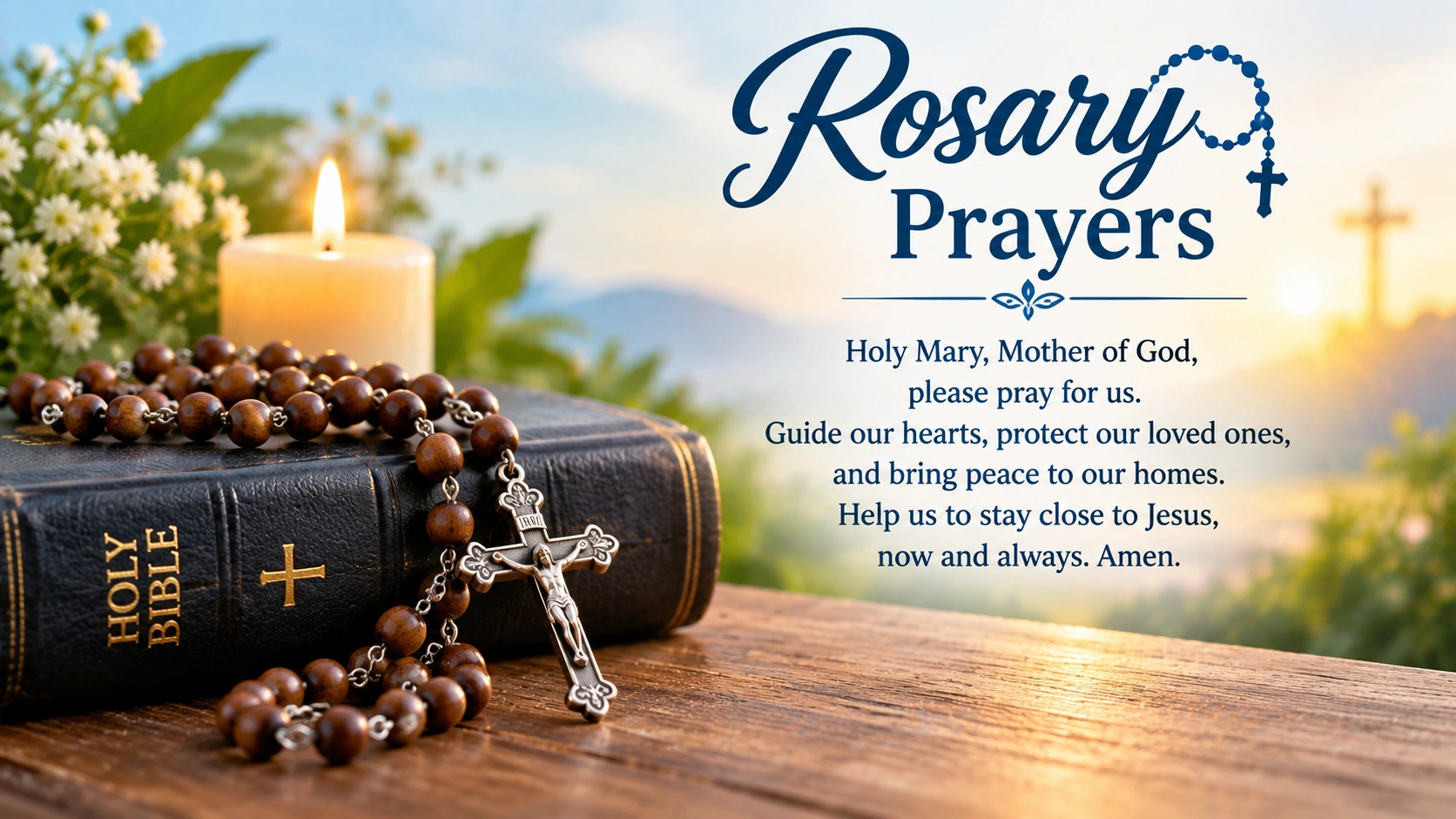
Many people who pray rosary prayers for healing and protection regularly for a family member describe adding this line quietly during a specific decade — often the Fifth Sorrowful Mystery or the Second Glorious Mystery — as a personal habit, even though it isn’t part of the formal text.
The Memorare: A Shorter Prayer Often Paired With the Rosary
Alongside the full rosary, many Catholics also turn to the Memorare, a shorter prayer traditionally prayed in urgent situations. It reads, in part, as a bold appeal to Mary’s help, reminding her that no one who sought her intercession was ever left unaided. People facing sudden emergencies — an accident, an unexpected hospital admission, a frightening phone call — often say the Memorare first, before even reaching for their rosary beads, simply because it’s short enough to say in a single breath of panic.
Praying the Rosary When You’re Too Tired to Focus
Illness and worry are exhausting, and there will be nights when finishing a full rosary feels impossible. This is more common than people admit, and it doesn’t mean the prayer failed or that you failed at praying it.
Some people shorten their practice to a single decade during especially hard stretches — ten Hail Marys instead of fifty. Others let their mind wander mid-decade and simply return their attention gently, without guilt, the moment they notice. The beads themselves help here; even if your thoughts drift, your fingers keep moving through them, and many people find that the physical rhythm carries the prayer forward even when their concentration can’t.
Rosary prayers for healing and protection aren’t disqualified by distraction or exhaustion. The intention behind starting the prayer still counts, even on the nights you fall asleep halfway through the third decade.
Praying the Rosary for Someone Who Can’t Pray for Themselves
One of the most common reasons people turn specifically to the rosary during illness is that it allows them to pray on behalf of someone who is too sick, too young, too sedated, or too overwhelmed to pray for themselves. A parent might pray a rosary in a hospital hallway while their child is in surgery. A spouse might quietly work through the beads at a bedside while their partner sleeps.
This is part of what makes rosary prayers for healing and protection feel especially suited to caregiving. You don’t need the sick person to participate for the prayer to be considered complete or meaningful. The rosary was built, in part, for exactly this kind of standing-in, carrying someone else’s need forward when they can’t carry it themselves.
A Closing Prayer to End With
After finishing the decades, the traditional Hail Holy Queen closes the rosary, but some people add a final personal line specific to their situation before the closing Sign of the Cross: Mary, thank you for walking through this with me today. Whatever happens next with [name]’s illness, or whatever danger we’re facing, I’m choosing to trust that you and your Son haven’t let go of us. Amen.
Final Thoughts
Rosary prayers for healing and protection don’t promise a specific outcome or a guaranteed timeline. What they offer instead is a steady, repeatable way to keep showing up in prayer during seasons that feel too big to face all at once. Whether you’re praying through a diagnosis, a dangerous situation, or simply an unsettled stretch of life, the beads are there to hold onto — literally — while you work through fear one Hail Mary at a time. Keep praying, even on the tired nights. The rhythm itself is doing more than it might feel like in the moment.